
➤Summary
Cybersecurity researchers and threat intelligence teams are increasingly relying on an exposed credentials checker enterprise solution to identify leaked corporate and customer data before attackers can weaponize it. One recent case drawing attention in dark web monitoring communities involves an alleged data breach targeting HTMedica.com, where sensitive personal information reportedly surfaced on underground forums 😨.
The Kaduu team discovered the exposed database during routine monitoring activities across dark web marketplaces and cybercrime forums. According to the reports, the data was allegedly posted on Darkforums.su by a threat actor known as “Kazu” on May 17, 2026.
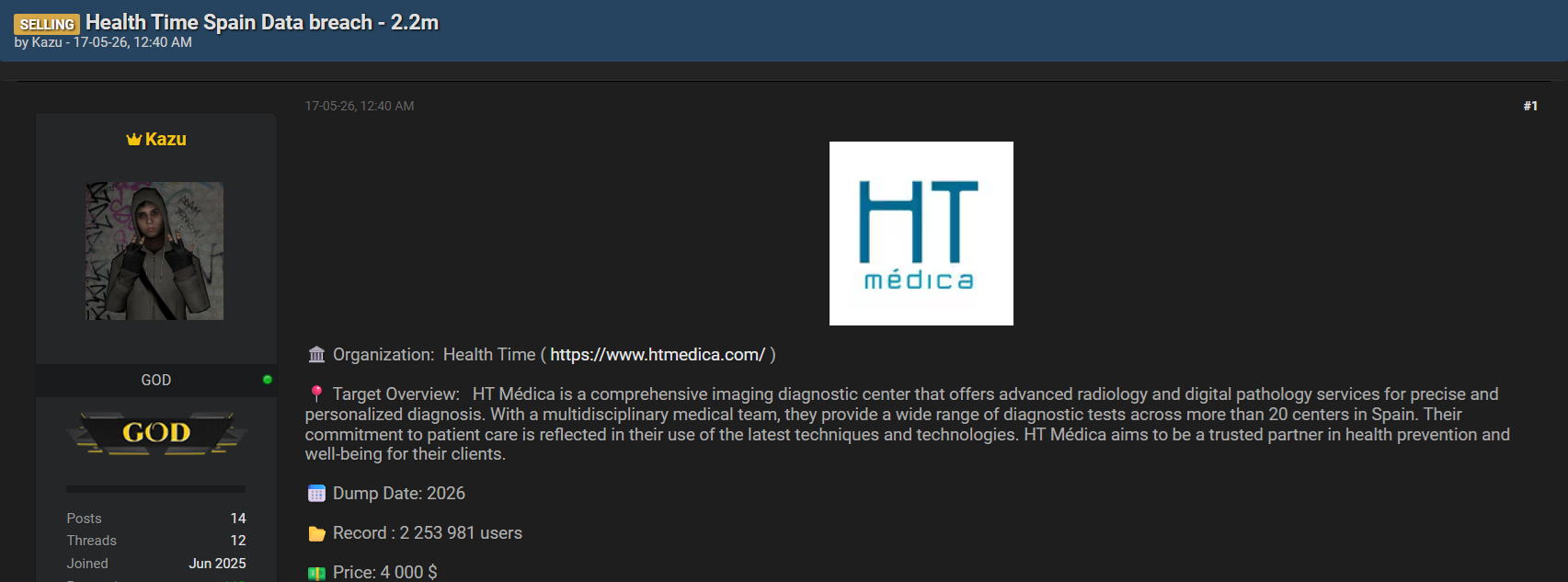
The compromised dataset reportedly includes highly sensitive records such as:
- First names and last names
- Birth dates
- DNI numbers
- Email addresses
- Phone numbers
- Home addresses
- Workplace phone numbers
- ZIP and population details
This incident highlights why domain monitoring for enterprises and dark web intelligence has become essential for healthcare organizations, enterprises, and MSSPs seeking early breach detection 🔍.
What Is an Exposed Credentials Checker Enterprise?
A brand protection software and exposed credentials checker enterprise platform is a cybersecurity solution designed to detect leaked usernames, passwords, customer records, and sensitive company data across dark web forums, breach repositories, paste sites, and underground marketplaces.
These tools continuously monitor:
- Credential dumps
- Stolen databases
- Breach marketplaces
- Dark web communities
- Phishing kits
- Exposed email accounts
Organizations use these platforms to identify potential compromise before attackers exploit stolen information for fraud, ransomware, or identity theft 🛡️.
Modern enterprise monitoring solutions like DarknetSearch help businesses proactively track compromised assets and suspicious exposure across hidden criminal ecosystems.
Alleged HTMedica.com Data Breach Details
The alleged HTMedica.com breach reportedly appeared on Darkforums.su, one of several underground communities frequently monitored by cybersecurity analysts.
According to the Kaduu team:
| Breach Detail | Information |
| Target | HTMedica.com |
| Discovery Source | Darkforums.su |
| Threat Actor | Kazu |
| Forum Publication Date | May 17, 2026 |
| Dump Date | 2026 |
| Discovery Team | Kaduu |
| Data Types | Personal identification and contact information |
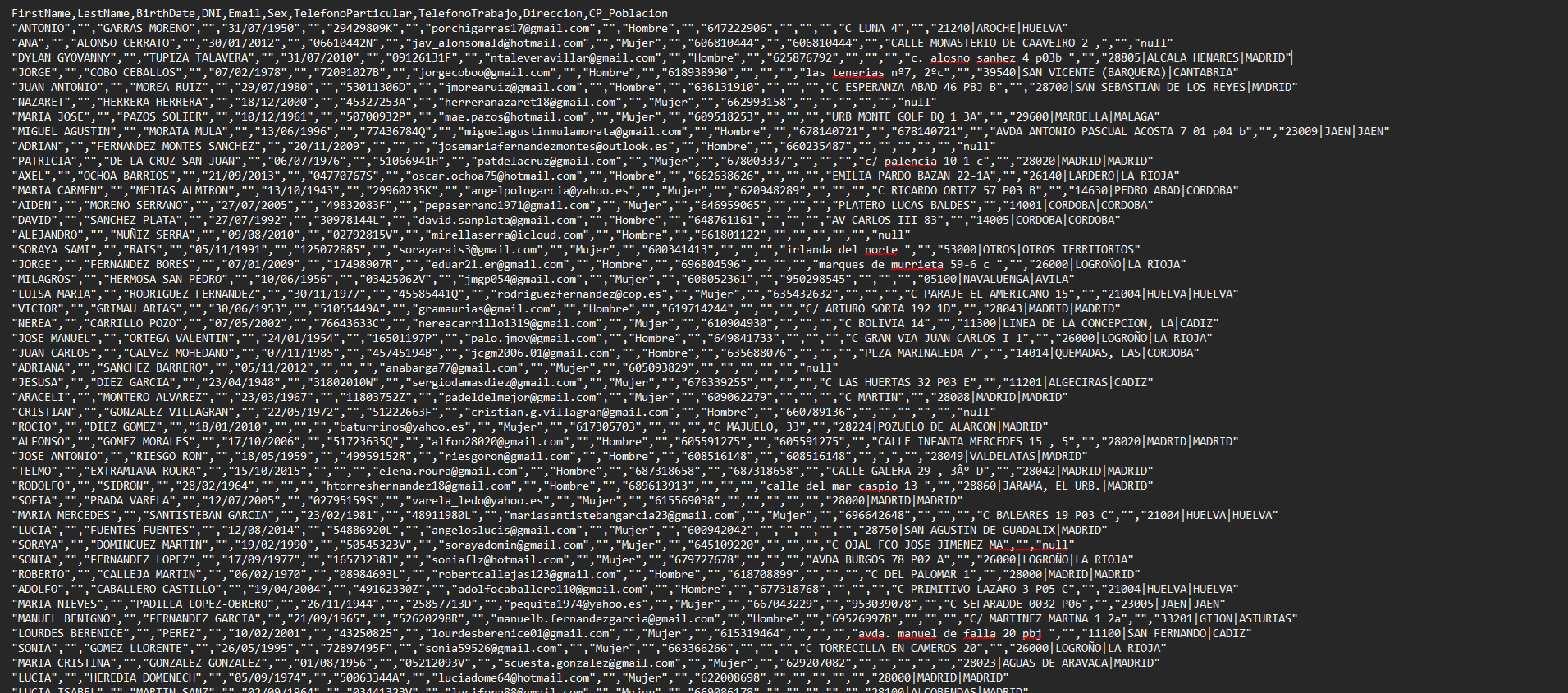
| The exposed records allegedly contain: |
- FirstName
- LastName
- BirthDate
- DNI
- Sex
- TelefonoParticular
- TelefonoTrabajo
- Direccion
- CP_Poblacion
If validated, this type of personally identifiable information (PII) exposure could create significant risks for affected individuals and organizations ⚠️.
How Domain Exposure Monitoring Dark Web Systems Work
A domain exposure monitoring dark web solution continuously scans underground communities and breach repositories to identify leaked organizational data before it spreads further.
These systems typically operate in four stages:
| Stage | Purpose |
| Collection | Gather data from dark web forums and leak sites |
| Analysis | Identify domains, emails, and compromised records |
| Correlation | Match exposed data to corporate infrastructure |
| Alerting | Notify security teams in real time |
| Advanced monitoring platforms use AI-driven threat intelligence and automated crawling technologies to detect: |
- Credential stuffing risks
- Leaked healthcare records
- Insider threats
- Unauthorized database exposure
- Ransomware leak publications
- Supply chain compromise indicators
Organizations increasingly integrates dark web data breach detection with SIEM and incident response workflows for faster breach containment 🚨.
Why Healthcare Data Is Highly Valuable to Attackers
Healthcare organizations remain prime targets for cybercriminals because medical records contain long-lasting personal identifiers that cannot easily be changed.
Unlike passwords or credit cards, healthcare-related identity data often includes:
- Government-issued IDs
- Birth dates
- Insurance information
- Home addresses
- Contact numbers
- Employment details
Attackers frequently use this information for: - Identity theft
- Insurance fraud
- Social engineering
- Account takeover attacks
- Spear phishing campaigns
- Financial fraud
A leaked healthcare database can remain valuable on underground markets for years 💰.
How Attackers Use Exposed Databases
Cybercriminals rarely stop at selling raw data. Stolen databases often become part of broader attack campaigns.
Common attacker usage includes:
- Phishing operations
- Credential stuffing attacks
- SIM swapping
- Synthetic identity fraud
- Business email compromise (BEC)
- Malware delivery campaigns
Question: Why do attackers prefer healthcare databases?
Answer: Because healthcare records contain rich identity information that can be reused across multiple fraud operations and social engineering attacks.
Threat actors may also combine multiple leaks to create detailed victim profiles for targeted exploitation.
Real-World Example of Government Data Exposure
Recent cybersecurity incidents show how rapidly leaked data can spread across underground forums. In one widely reported case, a French government agency confirmed a breach after attackers attempted to sell exposed data online.
Read more via BleepingComputer’s breach report.
These incidents demonstrate why proactive monitoring and breach detection are becoming mandatory for organizations handling sensitive information.
Business Risks Linked to Exposed Credentials
The alleged HTMedica.com exposure demonstrates several critical cybersecurity and compliance risks 📉.
Operational Risks
- Account compromise
- Fraudulent transactions
- Customer distrust
- Increased phishing attacks
Financial Risks
- Regulatory fines
- Incident response costs
- Legal liabilities
- Revenue loss
Reputation Risks
- Brand damage
- Negative media coverage
- Customer churn
- Loss of business partnerships
Organizations lacking an exposed credentials checker enterprise solution often discover breaches only after attackers begin exploiting stolen data publicly.
Detection and Mitigation Strategies
Businesses can significantly reduce exposure risks through layered cybersecurity controls 🔐.
Recommended Security Measures
✔ Deploy enterprise breach monitoring
✔ Use multi-factor authentication
✔ Monitor leaked credentials continuously
✔ Implement zero-trust security policies
✔ Conduct dark web intelligence scans
✔ Restrict privileged account access
✔ Train employees against phishing attacks
✔ Monitor underground forums proactively
Credential stuffing prevention solution like Darknetsearch.com allow organizations to identify potential exposure quickly before incidents escalate.
Practical Tip: Build a Dark Web Monitoring Checklist
Organizations should establish a repeatable exposure monitoring strategy.
Security Checklist
| Checklist Item | Importance |
| Monitor executive emails | High |
| Track exposed employee credentials | High |
| Scan underground forums daily | High |
| Audit third-party vendors | Medium |
| Enable MFA on all accounts | High |
| Review breach notifications weekly | Medium |
| Investigate leaked domains immediately | High |
| A mature domain exposure monitoring dark web program improves detection speed and strengthens incident response readiness 📊. |
The Role of AI in Exposure Detection
Artificial intelligence is increasingly transforming cyber threat intelligence 🤖.
AI-powered exposure monitoring tools can:
- Detect leaked domains automatically
- Identify breach patterns
- Correlate threat actor activity
- Prioritize high-risk exposure
- Reduce false positives
- Accelerate analyst workflows
Modern exposed credentials checker enterprise platforms now rely heavily on machine learning to process massive volumes of dark web intelligence efficiently.
Why Early Detection Matters
The faster an organization detects exposed records, the lower the potential impact.
Early breach discovery helps organizations:
- Reset compromised credentials
- Notify affected users
- Block malicious access
- Prevent fraud escalation
- Reduce regulatory exposure
- Strengthen incident response
Many organizations underestimate how quickly stolen data spreads once it reaches underground communities 🌐.
Final Thoughts
The alleged HTMedica.com breach is another reminder that healthcare organizations remain high-value targets for cybercriminals. Whether the exposed records are fully verified or still under investigation, the incident demonstrates the growing importance of proactive exposure monitoring and dark web intelligence.
An advanced exposed credentials checker enterprise platform combined with continuous dark web threat intelligence for enterprises can help organizations identify threats before attackers exploit leaked data at scale.
Cybersecurity teams, MSSPs, and enterprise defenders must prioritize real-time exposure monitoring, credential intelligence, and proactive threat detection to minimize operational and reputational damage.
See if your company is exposed
→ Start Free Trial
Discover much more in our complete guide
Request a demo NOW
Disclaimer: DarknetSearch reports on publicly available threat-intelligence sources. Inclusion of an organization in an article does not imply confirmed compromise. All claims are attributed to external sources unless explicitly verified.
Discover how CISOs, SOC teams, and risk leaders use our platform to detect leaks, monitor the dark web, and prevent account takeover.
🚀Explore use cases →