

➤Summary
The Leroy Merlin data breach has become one of the most alarming cybersecurity events affecting European retail customers in recent years. As one of Europe’s most influential retail DIY and home-improvement chains, Leroy Merlin handles millions of customer transactions each month, making it an attractive target for cybercriminals 🎯. When the company confirmed that a cyberattack had compromised part of its information system, concerns skyrocketed among consumers who rely on the brand for purchases, deliveries, and loyalty discounts. Security practitioners immediately pointed out the broader implications for data protection across the retail industry.
In the official customer notification (Source: @_SaxX_), Leroy Merlin stated:
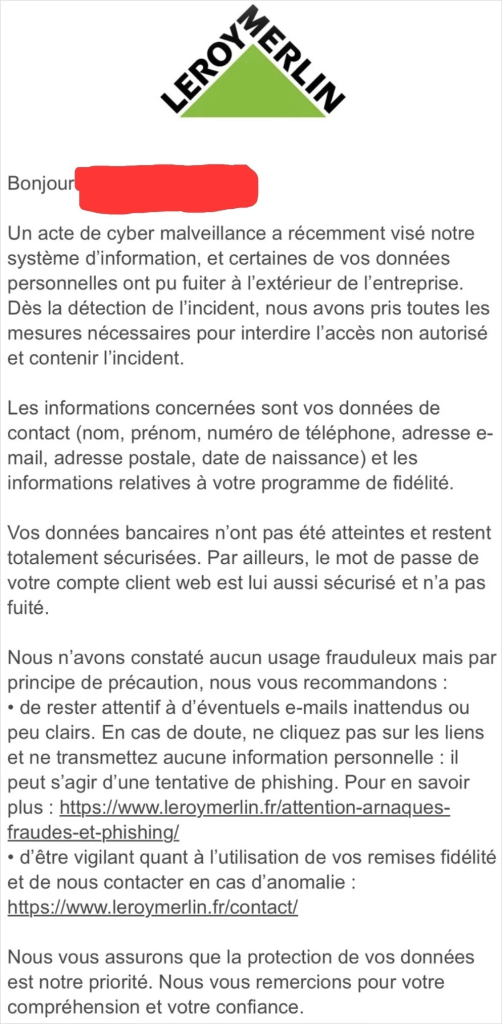
This declaration triggered significant media attention and highlighted the wide impact of this Leroy Merlin customer data exposure, especially because the compromised information includes full names, postal addresses, emails, phone numbers, dates of birth, and even loyalty program details 😟. While the company reassured consumers that passwords and payment data were not affected, the exposed categories still pose substantial risks such as phishing, identity fraud, impersonation, and targeted scams.
For many cybersecurity experts, this incident serves as a case study dark web monitoring scenario, demonstrating how exposed personal data can circulate for months or even years. In this in-depth guide, we break down what happened, the confirmed data exposed, the potential risks to affected individuals, and the actions you should take immediately 🔐.
What Happened in the Security Incident
The cyberattack that triggered the Leroy Merlin data breach targeted their customer information system, leading to unauthorized access to personal data.
This response indicates that Leroy Merlin activated its cybersecurity protocol, isolating compromised servers, involving security practitioners, and requesting advanced forensic support. Although many details remain undisclosed, the company’s rapid intervention helped prevent further escalation.
Cybersecurity analysts emphasize that this type of retail breach is increasingly common as criminals target large-scale databases to harvest identity information.
What Data Was Exposed in the Breach
The Leroy Merlin data breach exposed several categories of personal data frequently leveraged for cybercrime. Based on the customer notifications and official confirmations, the leaked data includes:
- Full name
- Email address
- Phone number
- Postal address
- Date of birth
- Loyalty program–related information
Data compromised are almost the same as this blog from darknetsearch.com – Freedom Mobile Blog, which highlights how attackers consistently target highly valuable identity attributes across different industries. While no banking information or account passwords were compromised, the combination of identity elements allows attackers to craft targeted phishing messages, impersonate customers, and manipulate victims through social engineering 😰.
Security practitioners warn that attackers may use this information to attempt account resets, impersonation attempts, and loyalty program fraud.
How Leroy Merlin Responded to the Cyberattack
In their official notice, Leroy Merlin confirmed a series of actions after detecting the intrusion:
- Blocking the malicious access
- Isolating affected systems
- Securing customer data with emergency protocols
- Collaborating with cybersecurity experts
- Notifying authorities and regulators
- Informing impacted customers
The company also reported the incident to the CNIL, complying with GDPR obligations for significant personal data exposure. Their reaction highlights a strong commitment to customer safety and data protection best practices 💼.
While immediate containment actions reduced additional damage, the nature of the exposed data means risks persist. Attackers often reuse leaked identity data months later, which is why dark web analysts treat incidents like this as an ongoing case study dark web monitoring event.
Risks for Affected Customers and How to Stay Safe
A natural question arises for anyone affected:
What should customers do now to protect themselves?
Answer:
Stay vigilant by monitoring email and SMS messages, verifying unexpected communications, and watching for signs of phishing 🧠.
Key Risks From the Exposure
- Phishing attempts – Emails pretending to be Leroy Merlin.
- Identity theft – Using data like name + birthdate for impersonation.
- Loyalty fraud – Unauthorized access to reward accounts.
- Social engineering – Scams based on personal information.
- Dark web resale – Exposed data often listed for cybercriminal use.
Practical Tip
✔ Always verify sender addresses on emails
✔ Never share personal data through unsolicited calls
✔ Enable two-factor authentication
✔ Monitor loyalty programs regularly
These best practices are endorsed by security practitioners for ongoing protection.
Checklist: What to Do After a Data Exposure
Follow this essential checklist to minimize risks:
- Monitor incoming messages for suspicious requests 📩
- Review password hygiene and update weak passwords
- Watch loyalty programs for unusual activity
- Enable security notifications on all accounts
- Avoid clicking unknown links
- Report phishing to your email provider
- Use identity monitoring services when possible
Data Breakdown Table: What Was Exposed
| Data Type | Was It Exposed? | Risk Level |
| Full Name | Yes | Medium |
| Email Address | Yes | High |
| Phone Number | Yes | High |
| Postal Address | Yes | Medium |
| Date of Birth | Yes | High |
| Loyalty Information | Yes | Medium |
| Passwords | No | Low |
| Banking Data | No | Low |
This overview helps identify which details require closer attention from affected customers.
Expert Insight
Cybersecurity specialists note that personal identifiers like names, emails, and birthdates hold long-term value for attackers, making them equally dangerous as financial data. Security practitioners often analyze retail breaches as learning opportunities to tighten data protection protocols and improve system resilience.
Conclusion
The Leroy Merlin data breach underscores the importance of strong cybersecurity systems, effective data protection strategies, and ongoing vigilance from consumers and companies alike. Although Leroy Merlin acted quickly to contain the cybersecurity incident, affected customers must remain cautious to avoid falling victim to phishing or identity fraud. Use the checklist and expert recommendations in this guide to strengthen your online safety and stay informed 💡.
Discover much more in our complete guide
Request a demo NOW
Discover how CISOs, SOC teams, and risk leaders use our platform to detect leaks, monitor the dark web, and prevent account takeover.
🚀Explore use cases →Q: What is dark web monitoring?
A: Dark web monitoring is the process of tracking your organization’s data on hidden networks to detect leaked or stolen information such as passwords, credentials, or sensitive files shared by cybercriminals.
Q: How does dark web monitoring work?
A: Dark web monitoring works by scanning hidden sites and forums in real time to detect mentions of your data, credentials, or company information before cybercriminals can exploit them.
Q: Why use dark web monitoring?
A: Because it alerts you early when your data appears on the dark web, helping prevent breaches, fraud, and reputational damage before they escalate.
Q: Who needs dark web monitoring services?
A: MSSP and any organization that handles sensitive data, valuable assets, or customer information from small businesses to large enterprises benefits from dark web monitoring.
Q: What does it mean if your information is on the dark web?
A: It means your personal or company data has been exposed or stolen and could be used for fraud, identity theft, or unauthorized access immediate action is needed to protect yourself.
Q: What types of data breach information can dark web monitoring detect?
A: Dark web monitoring can detect data breach information such as leaked credentials, email addresses, passwords, database dumps, API keys, source code, financial data, and other sensitive information exposed on underground forums, marketplaces, and paste sites.