
➤Summary
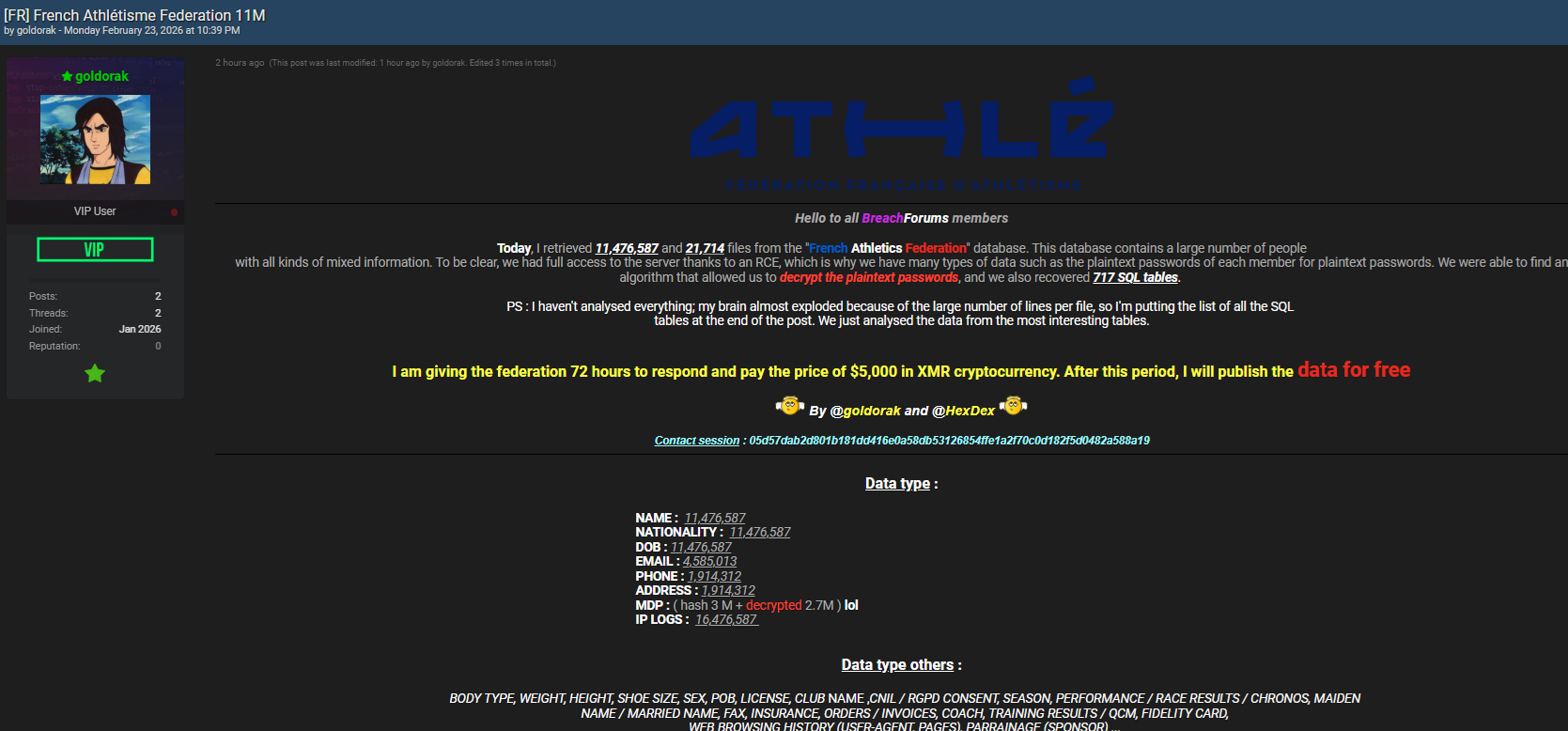
A major data breach has allegedly exposed sensitive information linked to the French Athletics Federation, raising serious concerns across the sports and cybersecurity communities. The incident surfaced after the Kaduu team identified a massive database being shared on underground forums during routine threat intelligence activities. According to publicly available posts, the dataset was published on BreachForums.as by an actor known as goldorak on 23 February 2026. This data breach allegedly involves more than 11 million individuals, making it one of the most significant sports-related exposure events reported in recent years. 🏃♂️
🚨 While investigations are ongoing, the scale and diversity of the compromised information have sparked widespread attention among athletes, clubs, and regulators.
How the Alleged Breach Was Discovered
The Kaduu team reportedly discovered the dataset while conducting continuous surveillance of illicit marketplaces and discussion boards. This type of discovery highlights the importance of Dark web monitoring platforms in identifying emerging threats before they escalate. The leaked database appeared structured, searchable, and packaged for distribution, suggesting deliberate aggregation rather than accidental exposure. The presence of detailed personal and behavioral data points to long-term collection and potential misuse. This data breach underscores how proactive intelligence gathering can surface critical risks even before official disclosures are made. 🔍💻
Scope of the Exposed Data and Why It Matters
Based on forum disclosures, the compromised dataset allegedly contains the following volumes:
• Names: 11,476,587 records
• Nationality: 11,476,587 records
• Date of birth: 11,476,587 records
• Email addresses: 4,585,013 records
• Phone numbers: 1,914,312 records
• Passwords: approximately 3 million hashed and 2.7 million decrypted
• IP logs: 16,476,587 entries
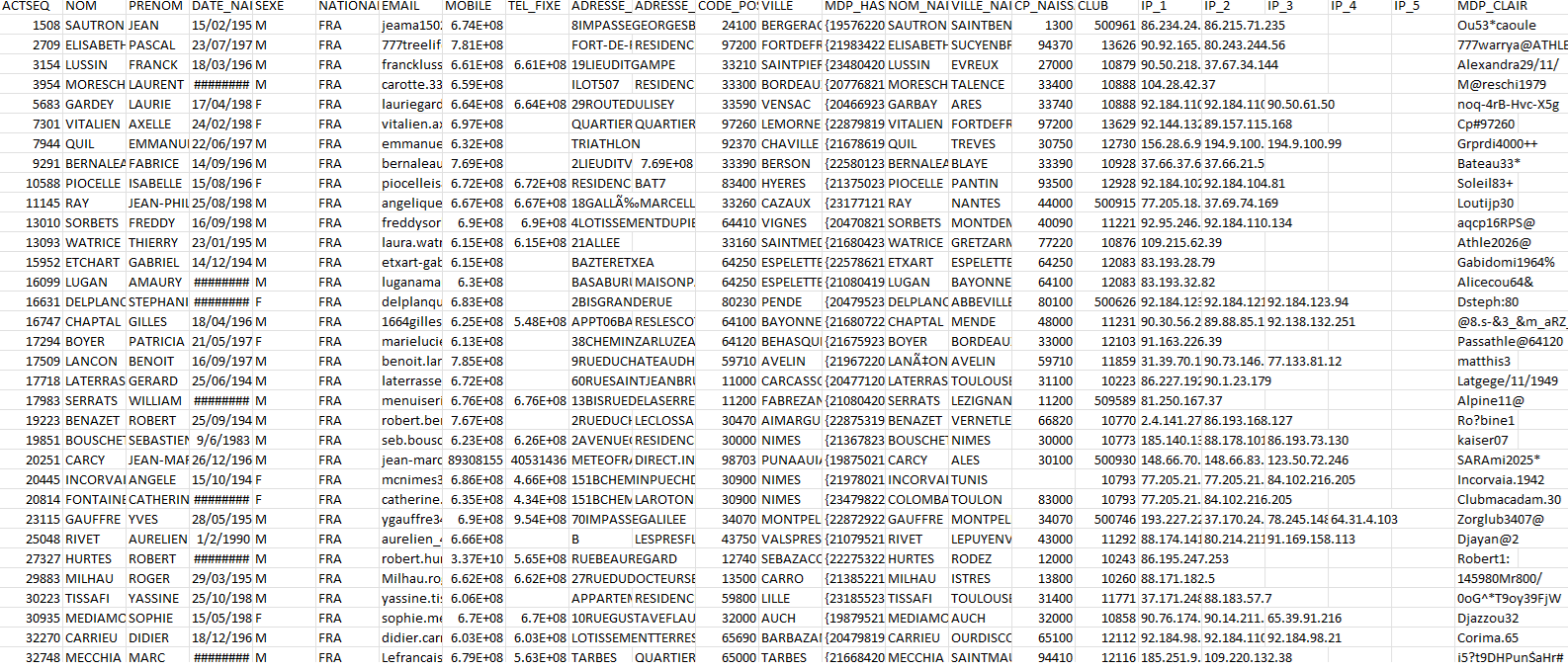
In addition, numerous secondary attributes were included, ranging from biometric details to administrative and sporting information. The sheer depth of this data breach increases the risk of identity theft, targeted phishing, and long-term profiling. 📊⚠️
Sensitive and Special-Category Information Exposed
Beyond basic identifiers, the dataset reportedly contains highly sensitive personal and contextual data. These include body type, weight, height, shoe size, sex, place of birth, license details, club affiliation, CNIL/RGPD consent flags, season participation, performance metrics, race results, training outcomes, insurance data, invoices, coaching records, and even web browsing history. Such comprehensive exposure transforms this incident from a simple leak into a complex privacy event. When combined, these data points could enable sophisticated social engineering or fraud campaigns. This data breach therefore carries implications far beyond immediate account compromise. 🧬📁
Dark Web Forums and the Role of Threat Actors
The publication of the dataset on BreachForums.as illustrates how underground communities function as distribution hubs for stolen data. Threat actors often use reputation, pricing, or exclusivity to gain attention. In this case, the author “goldorak” provided detailed statistics, a tactic commonly used to establish credibility. Analysts note that once a data breach appears on such forums, copies often proliferate rapidly across other channels. This amplifies risk and complicates containment efforts for affected organizations and individuals. 🌐🕶️
Is This a Confirmed Breach?
A critical question many readers ask is whether the French Athletics Federation has confirmed the incident. As of now, the information is based on external threat intelligence sources and forum claims. No public confirmation of compromise has been issued. However, the structure and volume of the dataset warrant serious attention. In cybersecurity, absence of confirmation does not equal absence of risk. Early awareness enables affected parties to take preventive action while investigations continue. This balanced approach is essential when assessing any alleged data breach.
Regulatory and Privacy Implications in Europe
If verified, this incident could have major regulatory consequences under European data protection frameworks. The inclusion of health-related and performance data may qualify parts of the dataset as special-category personal data. Supervisory authorities could examine whether appropriate safeguards, consent mechanisms, and retention policies were in place. For organizations operating at national scale, compliance failures can result in reputational damage and significant penalties. This data breach scenario reinforces why governance and security must evolve together. 🇪🇺📜
Practical Checklist: What Affected Individuals Should Do
If you believe your data may be included, consider the following steps:
• Change passwords associated with sports or federation accounts
• Enable multi-factor authentication where available
• Monitor email and phone communications for phishing attempts
• Be cautious of messages referencing athletic licenses or results
• Check financial statements for unusual activity
• Stay informed through trusted security updates
These actions can reduce harm even when details remain unconfirmed. ✅🔐
One Key Question Answered
Question: Why would athletic performance data be valuable to cybercriminals?
Answer: When combined with personal identifiers, performance and training data can be used to build detailed profiles, enabling targeted scams, impersonation, or reputational manipulation.
The Broader Threat Landscape
Large membership organizations are increasingly targeted because of centralized databases and long data retention periods. This incident highlights the need for continuous dark web monitoring, robust access controls, and timely data breach detection capabilities. Even niche sectors like sports are no longer peripheral targets. As attackers monetize any form of personal data, vigilance becomes universal. 🛡️📈
Learning from the Incident
Whether ultimately confirmed or not, this alleged exposure offers important lessons. Organizations must inventory the data they collect, minimize unnecessary retention, and encrypt sensitive fields. Regular audits and incident simulations can reduce response time. From an intelligence perspective, early discovery of a data records leak allows for faster stakeholder notification and mitigation planning. Knowledge, in this context, is a defensive asset.
Conclusion: Awareness Is the First Line of Defense
The alleged French Athletics Federation incident demonstrates how a single data breach can ripple across millions of lives. Transparency, preparedness, and education remain the strongest tools against misuse of personal information. By staying informed and adopting proactive security practices, both organizations and individuals can reduce long-term impact. 🚀🔔 Discover much more in our complete guide and stay ahead of emerging threats. Request a demo NOW to see how continuous intelligence can protect your digital ecosystem.
Disclaimer: DarknetSearch reports on publicly available threat-intelligence sources. Inclusion of an organization in an article does not imply confirmed compromise. All claims are attributed to external sources unless explicitly verified.
Discover how CISOs, SOC teams, and risk leaders use our platform to detect leaks, monitor the dark web, and prevent account takeover.
🚀Explore use cases →Q: What is dark web monitoring?
A: Dark web monitoring is the process of tracking your organization’s data on hidden networks to detect leaked or stolen information such as passwords, credentials, or sensitive files shared by cybercriminals.
Q: How does dark web monitoring work?
A: Dark web monitoring works by scanning hidden sites and forums in real time to detect mentions of your data, credentials, or company information before cybercriminals can exploit them.
Q: Why use dark web monitoring?
A: Because it alerts you early when your data appears on the dark web, helping prevent breaches, fraud, and reputational damage before they escalate.
Q: Who needs dark web monitoring services?
A: MSSP and any organization that handles sensitive data, valuable assets, or customer information from small businesses to large enterprises benefits from dark web monitoring.
Q: What does it mean if your information is on the dark web?
A: It means your personal or company data has been exposed or stolen and could be used for fraud, identity theft, or unauthorized access immediate action is needed to protect yourself.
Q: What types of data breach information can dark web monitoring detect?
A: Dark web monitoring can detect data breach information such as leaked credentials, email addresses, passwords, database dumps, API keys, source code, financial data, and other sensitive information exposed on underground forums, marketplaces, and paste sites.