

➤Summary
The Cloudeka data breach has become a major highlight in late 2025 cybersecurity discussions, raising widespread concerns among companies that rely on cloud based services, digital infrastructure, and managed network systems. Posted on Darkforums.st by a user identified as KaruHunters, the leak surfaced on 23 November 2025 and allegedly contains a wide range of technical materials including system diagnostics, cluster management scripts, printer driver databases, and Linux kernel headers 😮. As this cybersecurity incident continues to develop, analysts are reviewing the alleged data exposure claims and comparing them to known repository structures. While nothing suggests this is a customer data compromise, the Cloudeka source code leak reports have attracted significant attention from journalists and digital forensics communities across the web. This article explores the alleged contents, industry reactions, and why cloud security researchers are closely monitoring the situation 👀.
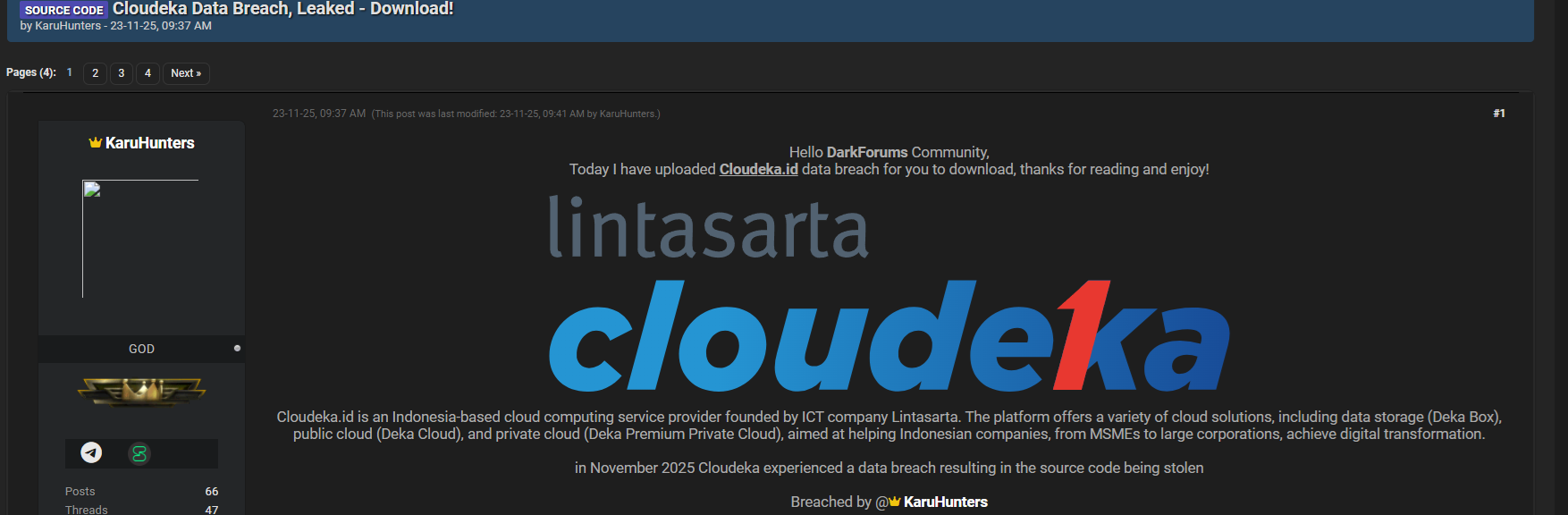
Breakdown of the Alleged Leak Posted by KaruHunters
According to the Darkforums post, the threat actors claimed access to a large archive of technical resources, a detail that analysts and CISO level professionals across the Technology Industry have been evaluating with increased scrutiny. Current assessments indicate that the materials resemble a blend of development components and testing files commonly used within Linux based engineering environments. The Cloudeka data breach discussion therefore centers not on sensitive customer information but on whether these items represent internal engineering assets. Experts note that such files alone do not confirm a deep system compromise, though they do raise important questions about repository management practices and broader data exposure risks. When compared to the related blog on Darknetsearch.com at, which details a significant leak of corporate files and confirmed customer data, the Cloudeka situation appears more aligned with development oriented exposure, offering a useful contrast for readers examining breach patterns across the modern security landscape.
Cluster Management Tools in the Spotlight
One of the main components mentioned in the leak involves items related to crmsh, a tool widely used for cluster resource management. The archive allegedly contains configuration templates, testing scripts, and source code 📁. From a cybersecurity incident perspective, these materials are not inherently dangerous but could reveal general formatting or workflow practices within certain development environments. Analysts note that configuration templates can provide insight into how clusters are structured but do not represent direct access points. As discussions continue, the focus remains on assessing how such materials might have been collected and whether they genuinely originate from internal Cloudeka systems.
Network Monitoring Resources and Their Significance
Also included in the alleged archive are files tied to cricket, a known network traffic monitoring tool. These items reportedly include example router settings, switch configurations, and system performance samples. For many experts examining the Cloudeka source code leak reports, these examples appear consistent with what developers or testers might use to simulate network conditions. While not harmful in isolation, such resources indicate how a development environment may have been organized. These insights contribute to broader cloud security conversations and help shape the understanding of modern infrastructure workflows.
System Diagnostics Directories and Their Role
The alleged leak highlights directories referencing cpu checker and crash, both tools used for diagnostics and kernel crash dump examination 🧩. These materials suggest involvement with debugging or testing within Linux based environments. Security researchers emphasize that these files do not indicate immediate vulnerability but reflect common tools used in digital forensics and operating system validation. Their presence adds context to the overall archive and strengthens the theory that this may represent a snapshot of a development or build environment rather than anything tied directly to customer operations.
Development and Debugging Tools Included in the Archive
The leak further claims to include source files connected to gdb and cvs, two widely recognized development utilities. The presence of these tools supports theories that the materials come from a technical repository used to compile, debug, or maintain various components. Within the Cloudeka data breach discussions, researchers stress that these tools are common across many engineering stacks and their presence alone does not confirm a direct breach of sensitive systems. Instead, these elements simply add detail to the ongoing investigation and help determine the nature of the environment represented.
Insights Into the Driver Databases Mentioned Online
A notable part of the archive is the mention of foomatic db, which provides printer driver information for brands such as HP, Epson, and Brother 🖨️. This kind of database is commonly stored within large scale Linux build systems, making it a recognizable part of many development environments. Although unrelated to cloud management, its presence is typical for environments that compile custom distributions. This supports the theory that the leaked archive may reflect a broad technical repository rather than direct cloud infrastructure files.
Kernel Headers and PowerPC Specific References
The archive reportedly includes Linux kernel headers for PowerPC based architectures. This detail caught the attention of digital forensics researchers because PowerPC headers are more commonly used in specialized or legacy systems. Their presence could indicate cross platform compilation or historical compatibility testing 🤔. While this element does not pose security risk by itself, it does contribute valuable context to the breach report narrative and helps professionals understand the likely origin of the files.
Practical Tip for Strengthening Cloud Security
If you are concerned about how incidents like the Cloudeka data breach reflect on your own infrastructure, consider this checklist 📌:
- Audit development environments with the same rigor as production systems
- Secure configuration templates to avoid accidental exposure
- Enforce role-based access controls for all repositories
- Monitor backup mirrors to ensure unneeded components are not publicly reachable
- Document all build environments for easier digital forensics review
These practices reinforce cloud security and support effective incident response.
A Common Question Many Users Ask
Does an archive of technical files automatically mean a system was breached?
No. Many leaks involve development snapshots, mirrored repositories, or testing directories that do not indicate direct access to operational systems. Digital forensics experts caution against drawing conclusions until thorough analysis confirms origin and relevance. This is why breach report discussions often evolve slowly and rely on careful verification.
Why This Incident Matters for the Industry
Industry experts highlight this situation as an important example of how technical repositories can become part of major cybersecurity incident discussions even when customer data is not at stake 🛡️. The Cloudeka source code leak narrative underscores the need for stronger repository hygiene, better segregation of development assets, and frequent audits of build environments. These measures support cloud security objectives and reduce the likelihood of data exposure.
What Comes Next in the Investigation
Investigators and analysts will continue examining the leak and comparing it to known structures from Linux repositories and cloud management systems. More detailed reporting may emerge as journalists collect new statements and evidence. For real time updates, platforms such as DarkNetSearch dot com provide fast summaries and related breach report stories. You can also reference external coverage from Botcrawl or DailyDarkWeb to follow how the story evolves across the cybersecurity space.
Conclusion
The Cloudeka data breach has captured significant attention across digital forensics communities, journalistic outlets, and cloud security researchers. While the alleged leaked archive appears to contain technical resources rather than sensitive customer information, it highlights the importance of protecting development environments. As the cybersecurity incident continues to be analyzed, it reinforces the need for proper repository management, strict internal access controls, and robust incident response strategies. Staying informed is essential for understanding how cloud security threats evolve over time. Explore trusted platforms and resources to deepen your knowledge and maintain strong digital awareness 🔐.
Discover much more in our complete guide
Request a demo NOW
Discover how CISOs, SOC teams, and risk leaders use our platform to detect leaks, monitor the dark web, and prevent account takeover.
🚀Explore use cases →Q: What is dark web monitoring?
A: Dark web monitoring is the process of tracking your organization’s data on hidden networks to detect leaked or stolen information such as passwords, credentials, or sensitive files shared by cybercriminals.
Q: How does dark web monitoring work?
A: Dark web monitoring works by scanning hidden sites and forums in real time to detect mentions of your data, credentials, or company information before cybercriminals can exploit them.
Q: Why use dark web monitoring?
A: Because it alerts you early when your data appears on the dark web, helping prevent breaches, fraud, and reputational damage before they escalate.
Q: Who needs dark web monitoring services?
A: MSSP and any organization that handles sensitive data, valuable assets, or customer information from small businesses to large enterprises benefits from dark web monitoring.
Q: What does it mean if your information is on the dark web?
A: It means your personal or company data has been exposed or stolen and could be used for fraud, identity theft, or unauthorized access immediate action is needed to protect yourself.
Q: What types of data breach information can dark web monitoring detect?
A: Dark web monitoring can detect data breach information such as leaked credentials, email addresses, passwords, database dumps, API keys, source code, financial data, and other sensitive information exposed on underground forums, marketplaces, and paste sites.