
➤Summary
Revolut data breach reporting in September 2026 showed how sensitive customer information can be exposed without a reported compromise of the company’s core systems. Revolut said an unauthorized third party used a legitimate government agency email domain to submit fraudulent requests for information. The incident highlights a different security failure: trusted communications can still be abused when the requester’s authority is not independently verified.
What Happened in the Revolut Data Breach?
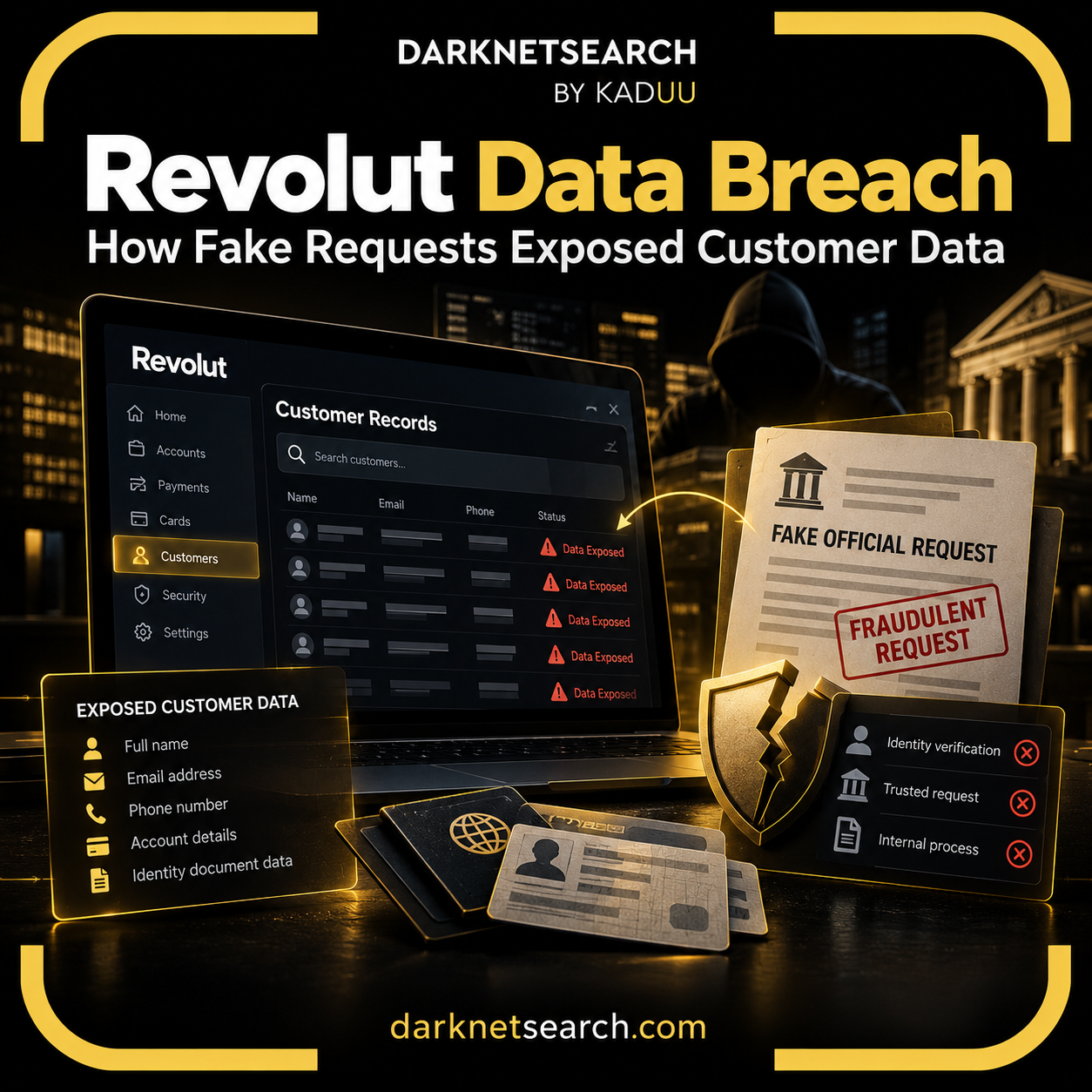
On September 12, 2026, Revolut confirmed that sensitive customer information had been disclosed to an unauthorized third party after fraudulent requests arrived from a legitimate government agency email domain. The company said the incident affected a “very limited” number of customers, that affected users had been notified, and that Revolut systems and customer funds were unaffected.
Reuters reported that Revolut blocked the relevant address and notified the government agency, law enforcement, and regulators. The company did not publicly identify the agency or disclose an exact customer count at the time of its initial confirmation.
The available public reporting therefore describes an unauthorized disclosure caused by fraudulent requests, not a confirmed intrusion into Revolut’s production environment.
What Customer Data Was Potentially Exposed?
TechCrunch reviewed a notification sent to affected customers and reported that exposed information could include birth dates, postal and email addresses, phone numbers, and copies of identity documents such as passports and driver’s licenses. The notification also indicated that verification selfies, account statements, and transaction histories may have been included for some customers. TechCrunch’s report on the customer notification
Later reporting placed the number of affected customers at around 680, but Revolut’s initial public statement did not confirm an exact total. Until the company or a regulator publishes a final figure, the safer description is that a limited group was affected and the exact scope remains subject to investigation. The Guardian
Identity documents create a different risk profile from a password leak. Passwords can be reset. A passport image, date of birth, residential address, or verification selfie may remain useful to fraudsters for years. DarknetSearch has examined this longer-term problem in its analysis of identity-document exposure.
Why This Was Not a Conventional Network Breach
Many data breaches begin with malware, stolen credentials, exploited vulnerabilities, or compromised cloud accounts. The Revolut incident, based on the company’s description, followed another path.
The attacker apparently exploited trust in a communication channel. A request arrived from a legitimate government agency email domain, creating a strong signal of authenticity. Yet an authenticated domain does not necessarily prove that the person using an account is authorized to request a particular customer’s records.
Email authentication can help establish whether a message was sent through an authorized domain, but it does not establish the legal authority, identity, purpose, or scope of the person making a sensitive request.
Social engineering works by exploiting trust rather than necessarily defeating a technical security control. The same principle matters here: high-risk requests still require independent verification even when some technical trust signals appear valid.
Verify Authority, Not Just the Sender
Organizations handling sensitive data receive requests from regulators, courts, police agencies, banks, partners, and other trusted institutions. For high-impact disclosures, a single trusted channel should not be the only control.
A stronger process can include:
- verifying the requester through an independently maintained contact method;
- confirming the legal basis and case reference;
- requiring a second internal approver for sensitive disclosures;
- checking whether requested fields are proportionate to the stated purpose;
- recording exactly what data was released and under which authority;
- escalating unusual requests to legal, privacy, fraud, or security teams.
The objective is to prevent control of one mailbox, account, or communication path from becoming sufficient authority to obtain sensitive records.
Why Exposed KYC Data Can Create Secondary Attacks
Know-your-customer information is valuable because it contains details organizations use to establish trust.
A criminal with an identity document, address, phone number, transaction information, and account context may be able to create more convincing follow-on scams. Potential risks include targeted phishing, fraudulent account-recovery attempts, identity fraud, impersonation, and social engineering against financial institutions or other service providers.
The presence of a customer record in a stolen dataset does not mean those attacks occurred, but it improves the attacker’s information advantage.
This can also intersect with credential risk. If customer email addresses are later combined with passwords or authentication data from unrelated breaches, attackers may attempt account takeover elsewhere. DarknetSearch’s credential leak detection resources explain why external credential findings should be validated and correlated with internal authentication telemetry rather than treated as proof of compromise by themselves.
What Security Teams Should Investigate
A fraudulent disclosure request is both a privacy incident and a security-control failure. Response should therefore go beyond blocking one sender.
Security teams should preserve the original messages and case records, identify every customer record disclosed through the suspicious request path, review other requests from the same account or agency domain, and determine whether similar requests were processed elsewhere.
Teams should also look for follow-on activity involving affected identities, including unusual password resets, suspicious authentication attempts, fraudulent support interactions, or phishing that references information contained in the exposed records.
Data Breach, Data Leak, and External Exposure Are Not the Same
Precise terminology matters.
A confirmed unauthorized disclosure is a data breach because information was provided to a party that was not authorized to receive it. A dataset later appearing online would be an additional external exposure, but its appearance would not necessarily prove a second intrusion.
A criminal forum post claiming to possess Revolut data would remain a threat-actor claim until validated. A stealer log containing a Revolut login could originate from an infected customer device and would not prove that Revolut itself had been breached.
Dark web monitoring can help defenders identify whether stolen records, credentials, or related discussions appear in criminal ecosystems, but it should complement internal investigation, fraud controls, identity monitoring, and legal response.
How Organizations Can Reduce This Type of Risk
The Revolut incident suggests several controls that are relevant beyond banking and fintech:
- Map every workflow that can release customer or employee information externally.
- Classify which request types require independent verification.
- Maintain trusted contact details for frequent government and regulatory counterparts.
- Require dual authorization for highly sensitive disclosures.
- Minimize the fields released to what is legally necessary.
- Log the requester, authority, approver, and exact data disclosed.
- Review historical requests when a trusted external account is suspected of compromise.
- Monitor affected identities for follow-on fraud and social engineering.
These measures address the actual failure mode: a request can look technically legitimate while still being fraudulent.
Frequently Asked Questions
Was Revolut’s internal system hacked?
Revolut said its systems and customer funds were unaffected. Public reporting described the incident as an unauthorized disclosure following fraudulent requests sent from a legitimate government agency email domain. That is different from a confirmed compromise of Revolut’s production systems.
How many Revolut customers were affected?
Revolut initially said a “very limited” number of customers was affected and did not publicly provide an exact figure. Later media reports cited approximately 680 customers, but the company’s initial disclosure did not confirm that number.
What information was exposed?
Reporting based on customer notifications said potentially exposed information included contact details, dates of birth, identity documents and, for some customers, verification selfies, account statements, and transaction histories. The exact fields may vary between affected customers. TechCrunch
Can dark web monitoring prevent this type of breach?
No. Dark web monitoring cannot stop an organization from releasing information in response to a fraudulent request. Its role is different: it can help identify whether stolen data, credentials, or related criminal discussions appear externally after an incident.
Strengthen Visibility After Sensitive Data Exposure
The Revolut data breach shows that strong technical defenses are only part of protecting sensitive information. Organizations also need high-assurance processes for deciding when data can leave the business and who is truly authorized to receive it. DarknetSearch provides dark and deep web monitoring, credential exposure visibility, and external threat intelligence that can support post-incident investigation when organizations need to understand whether exposed information is circulating outside their controlled environment.
Discover how CISOs, SOC teams, and risk leaders use our platform to detect leaks, monitor the dark web, and prevent account takeover.
🚀Explore use cases →