

➤Summary
The shocking China airlines data breach has rocked both the aviation and eCommerce sectors, revealing that 31 million lines of customer data have been leaked online. This massive airline data breach affects millions of passengers and online shoppers who have used airline-linked eCommerce platforms for bookings and payments. 🧳 Names, phone numbers, and email addresses were exposed, leading to serious cybersecurity and legal concerns across Asia and beyond. The China Airlines customer records 31 million lines breach demonstrates how the intersection of travel and digital commerce remains a high-value target for hackers.
Scope of the Breach and Data Exposed
The China airline data breach has exposed vast quantities of sensitive data — from personal identifiers to transaction logs from connected eCommerce systems. 💻 Reports confirm that leaked databases surfaced on underground forums where threat actors are trading them for cryptocurrency. (TechCrunch report)
Key data exposed:
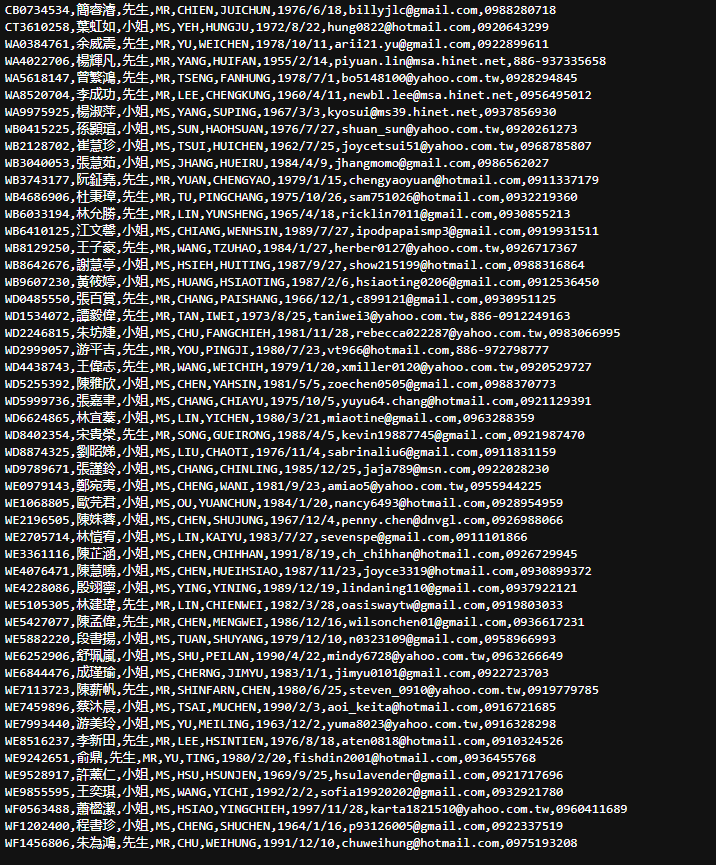
- 31 million lines of passenger and booking information
- Customer names, emails, and contact numbers
- Linked eCommerce transactions and loyalty data
- Likely cause: misconfigured cloud database and poor encryption practices
This case outpaces several prior airline data breach incidents, making it one of the most severe aviation cyber incidents in recent years.
Who’s Most at Risk and Why It Matters
The China airlines data breach affects both travellers and online consumers whose details may overlap with eCommerce payment or booking systems. 🚨 If you have ever used the airline’s website or mobile app, your profile could be vulnerable. Attackers may now attempt phishing scams or fraudulent refunds targeting passengers.
A cybersecurity expert from The Cyber Express said:
“This breach highlights how airlines are also major eCommerce platforms — storing vast customer and payment data that require strong legal and technical protection.”
💡 Practical tip: If you used China Airlines’ online shop or booking portal, reset your password immediately and secure your financial accounts.
Practical Checklist for Travellers ✅
Here’s what to do if you might be affected by the China airline data breach:
- Change passwords and enable two-factor authentication on all accounts.
- Monitor your eCommerce purchases for suspicious transactions.
- Avoid clicking on links in unsolicited messages or emails.
- Use DarknetSearch to check if your email or personal info is listed.
- Contact your bank for fraud monitoring options.
- Review airline statements and loyalty points for unusual activity.
🧠 Pro Tip: Keep copies of official communications — they may help in future legal verification or compensation claims.
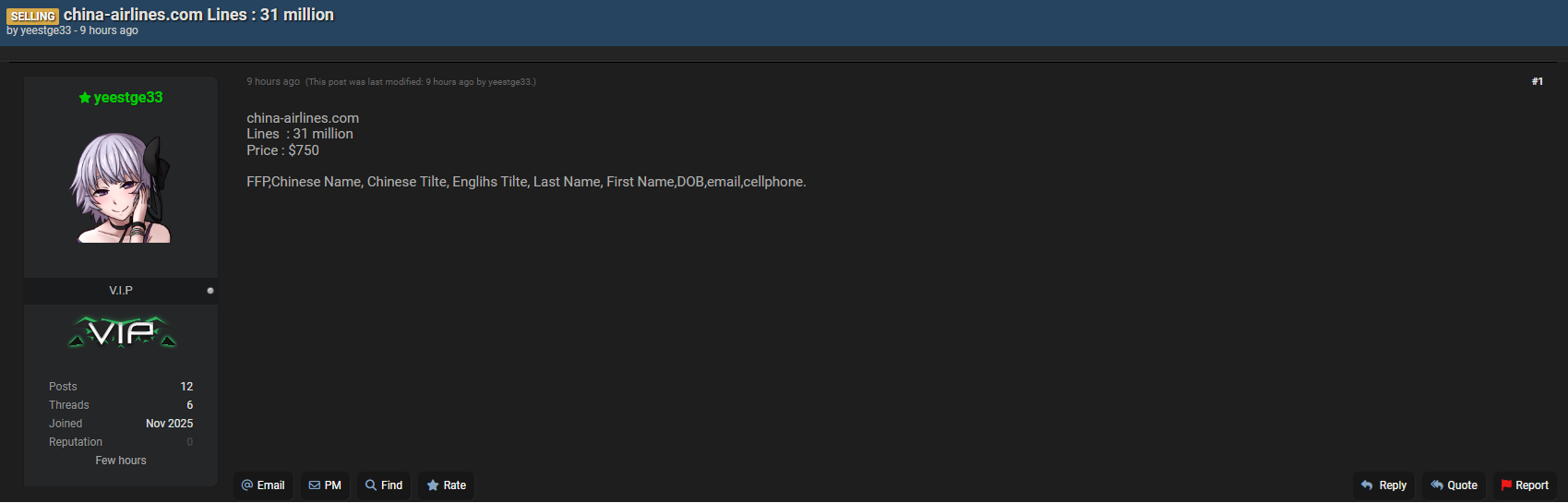
Proof of Forum Post 🧾
Forum: Darkforums.st
Author: yeestge33
Leak Published Date: 11 November 2025
Data Proof Section 📊
Legal and Regulatory Implications ⚖️
This airlines data breach may trigger serious legal responses under privacy and consumer protection laws. Victims may have grounds for claims under GDPR (for EU residents) and Taiwan’s PDPA. Airlines operating as eCommerce entities must comply with both aviation and data-privacy regulations.
Possible legal actions include:
- Regulatory investigations and compliance audits
- Customer compensation or data protection enforcement
- Fines for failing to secure sensitive information
Governments and cybersecurity agencies have already begun reviewing cross-border implications, as the exposed database includes international traveller information.
Broader Context and Preventive Measures 🕵️♂️
This China airlines data breach highlights a growing vulnerability in hybrid eCommerce platforms run by airlines. With ticketing, loyalty, and retail functions integrated, a single misconfiguration can expose millions. To prevent future breaches, experts recommend:
- Enforcing zero-trust security frameworks
- Using strong encryption for all cloud-stored data
- Conducting frequent security audits
- Strengthening legal and vendor compliance obligations
The China Airlines customer records 31 million lines breach stands as a wake-up call for both airlines and digital retailers worldwide.
What’s Next for China Airlines and Travellers ✈️
China Airlines has reportedly launched a full investigation and is working with law enforcement and cybersecurity practitioners consultants. 🔒 Travellers should remain alert for phishing messages and fraudulent refunds. Going forward, expect tighter eCommerce and passenger data controls, enhanced encryption, and stricter legal penalties for noncompliance.
Conclusion
The China airline data breach is one of the most alarming incidents in aviation cybersecurity, blending the dangers of travel data exposure with eCommerce and legal consequences. Passengers should act immediately to protect their data and demand stronger accountability from carriers.
🛡️ Stay updated on similar breaches at DarknetSearch and take proactive security measures to safeguard your digital footprint.
Discover much more in our complete guide.
Request a demo NOW.
Discover how CISOs, SOC teams, and risk leaders use our platform to detect leaks, monitor the dark web, and prevent account takeover.
🚀Explore use cases →